Preservation
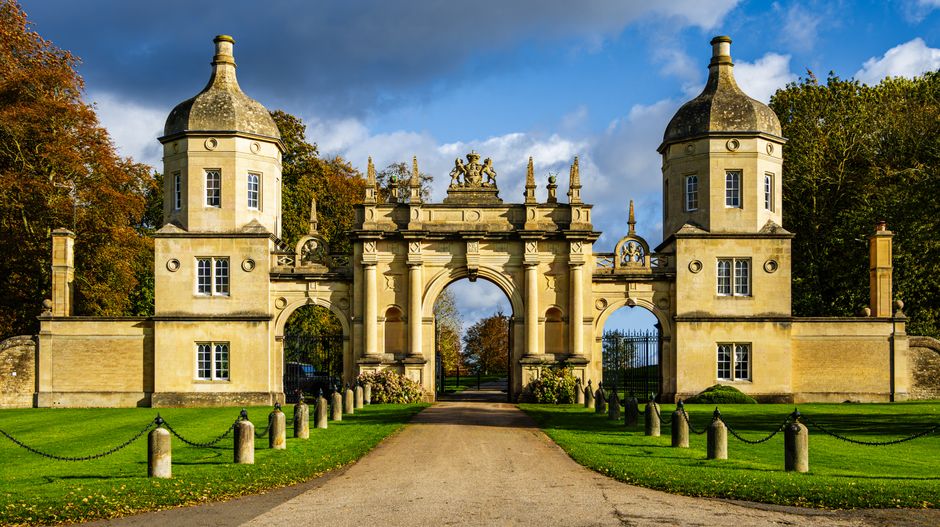
Drive down the narrow lane past Ashcombe village and you will see it before you understand it: a tall stone gatehouse with a four-centred arch, standing by itself at the edge of a pasture, with no wall on either side and no great house behind it. The manor it once served is gone, reduced to a few courses of brick under the turf, but the gatehouse remains — roofless for a time, now re-roofed, and still carrying the arms of the Ashcombe family above the arch.
The story of how it survived is a familiar one in this corner of the county. After the last Ashcombe heir died unmarried in the 1920s, the estate was broken up and the hall passed through a series of owners who found it impossible to maintain. By the early 1950s the house was structurally unsound and was demolished, its materials sold off piece by piece. The gatehouse, being a separate structure and something of a local landmark, was spared — partly through the efforts of a village committee that petitioned the county council to intervene.
What makes Ashcombe unusual is how completely the gatehouse has become the estate's memorial. Visitors often assume the hall once stood directly behind it, but old photographs show the main house set well back, reached by a long carriage drive that curved through parkland. The gatehouse was the threshold — the point where you left the public road and entered private ground — and its architecture was designed to make that transition feel significant. The battlements, the carved finials, the family arms: all of it was theatre, announcing that whoever passed beneath the arch was entering a different world.
That theatrical quality is exactly what makes gatehouses so vulnerable. They were built to frame something grander, and when the grander thing disappears, they can look faintly absurd — a doorway to nowhere. Some are demolished for that reason, their stone reused in garden walls. Others, like Ashcombe's, survive because a community decides they matter. The village committee's campaign in the 1950s was modest but effective, and a later restoration in the 1980s replaced the roof and stabilised the masonry.
Look closely at the stonework and the gatehouse becomes a document. The mouldings around the arch are Tudor in character, but the upper windows are later, suggesting the structure was remodelled in the seventeenth century. A blocked doorway on the inner face once led to a porter's lodge — a small room where a keeper would have controlled access to the estate. The wear on the threshold stone, hollowed by centuries of wheels and feet, is the kind of detail no archive can fully capture.
Today the gatehouse stands on private land, visible from the lane but not open to the public except on occasional heritage weekends. That limited access has probably helped it: there is no visitor centre, no car park, no interpretive panels cluttering the approach. What you get instead is the thing itself, in its field, doing the job it was built to do — marking a boundary that no longer exists, and reminding anyone who stops to look that a house once stood here, and that its entrance outlasted it.
