Architecture
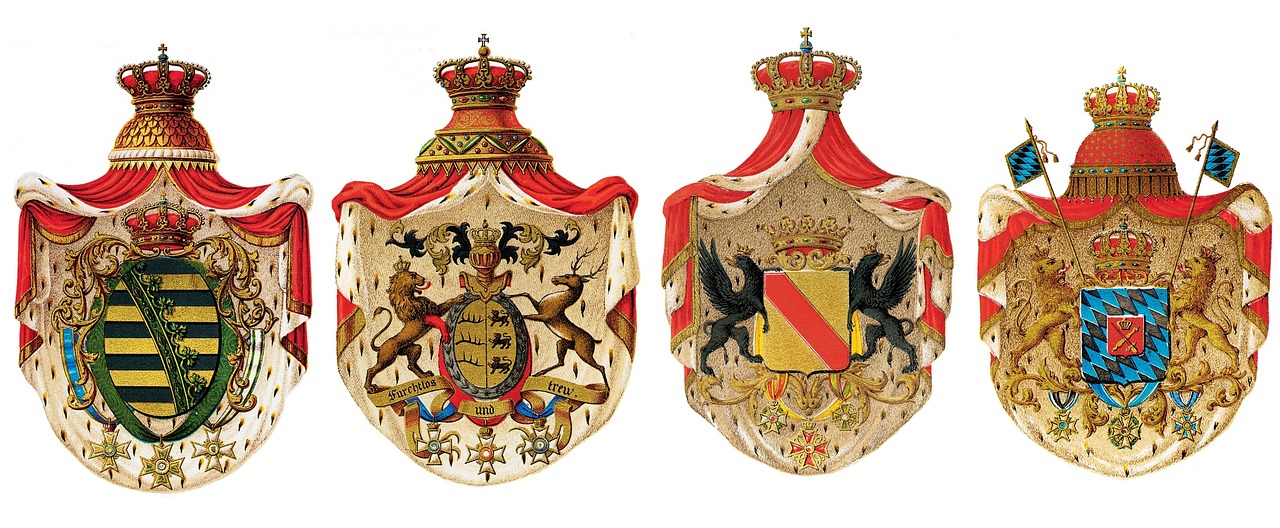
Look up the next time you pass beneath a gatehouse arch. Above the opening, or set into the wall beside it, you will often find a carved shield — sometimes worn almost smooth by weather, sometimes still sharp enough to read. These arms are one of the most useful and most overlooked features of a historic gatehouse, because they identify not just a family but often a specific moment in the estate's history.
Heraldry on gatehouses served a practical purpose before it became decorative. In an age when most people could not read, a coat of arms was a visual signature: this is whose land you are entering. The size and prominence of the carving reflected the owner's status and ambition. A modest shield over a side door said something different from a full achievement — shield, helm, crest, and supporters — crowning a main entrance.
The basic grammar of heraldry is straightforward once you know the terms. The shield is the central element, and the patterns and creatures on it are called charges. The colours are tinctures, divided into metals (gold and silver, usually shown as yellow and white) and colours proper (red, blue, black, green, purple). One of the oldest rules of heraldry is that metal should not be placed on metal, or colour on colour, which is why the contrasts on a well-designed shield are so striking.
Around the shield you may find a helm, a crest above it, and sometimes supporters — figures such as lions or stags holding the shield on either side. Supporters were traditionally reserved for peers and certain officeholders, so their presence on a gatehouse is a strong hint that the owner held a title. A motto, often on a ribbon below, can be the easiest element to read and the most useful for identification.
Dating from heraldry alone is risky, because families used the same arms for centuries. But certain details help. The shape of the shield changed over time — broader and rounder in the medieval period, more elaborate in the Victorian era. The style of the carving, the depth of relief, and the presence of a date stone nearby can all narrow the range. And if the arms are quartered, showing several coats combined, that usually indicates a marriage alliance, which can be checked against family records.
The most interesting gatehouses are those where the heraldry does not match the architecture. A Tudor-style arch carrying eighteenth-century arms suggests the gatehouse was rebuilt or remodelled by a later owner keen to claim the estate's older history. A Victorian lodge with medieval-looking arms may be a deliberate romantic gesture, part of the Gothic revival's love of the past.
Occasionally the arms are not a family's at all, but an institution's — a college, a city, a guild, or a religious order. These gatehouses often served a different purpose: an entrance to a precinct, a hospital, or a school rather than a private estate. Recognising the difference changes how you read the building, because the gate was controlling access to a community rather than to a family.
If you want to identify the arms on your local gatehouse, the best starting point is a good county history, which usually lists the principal families and their seats. Local record offices hold estate papers, and the College of Arms can help with difficult cases. But often the answer is closer than you think: a neighbouring church, a parish register, or a weathered tomb in the churchyard may carry the same shield, waiting to be matched.
